
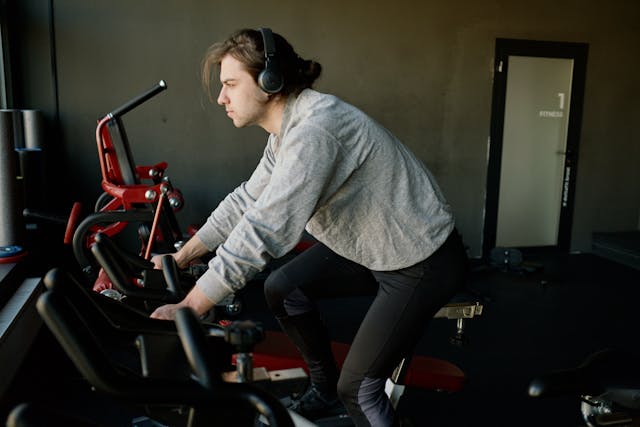
For decades, athletic training followed a familiar formula: train hard, rest strategically, repeat. Coaches relied on their own experience, instinct, tradition, and visible performance markers like pace, power, and heart rate.
Now, a quieter revolution is underway. Instead of guessing how an athlete feels on the inside, artificial intelligence is helping decode what their body is actually saying through biomarkers.
What Are Biomarkers and Why Do They Matter?
Biomarkers are measurable signals, substances, or processes within the body that reflect how it’s functioning. In sport and exercise, these can include hormones like cortisol and testosterone, markers of inflammation, iron status, glucose regulation, lactate threshold, and indicators of muscle damage.
Unlike pace, mileage, or acceleration, biomarkers reveal what’s happening beneath the skin. They can provide an assessment of performance and can show whether an athlete is adapting well, under-recovering, or quietly heading toward burnout before performance drops. For serious amateur and elite athletes, this internal view is invaluable. It turns training from a reactive process into a proactive one, where adjustments can be made before problems show up on the day of competition.
Training Has Always Been Data-Driven—Just Not This Deep
Sports science isn’t new. Blood lactate testing, VO₂ max measurements, and performance analytics have been around for years, especially in endurance sports. What’s changed is volume and complexity. Modern athletes can now generate massive streams of data from wearables, lab tests, sleep trackers, and nutrition logs. However, human coaches can’t realistically spot every meaningful pattern in that data. That’s where AI is changing the game.
How AI Turns Biomarkers Into Actionable Insight
Artificial intelligence excels at identifying patterns across large, messy datasets. When applied to biomarkers, AI systems can analyze trends in several different types of data over time, rather than isolated test results.
Instead of simply flagging a high cortisol reading, AI can recognize how cortisol interacts with sleep quality, training load, and inflammation markers. It can predict whether an athlete is resilient or approaching overtraining.
This moves training decisions from “How do you feel today?” to “Here’s what your physiology suggests you need right now.” It’s a subtle but powerful shift.
Why This Matters So Much for Elite Athletes
At the elite level, the margin between success and setback is razor thin. Small mistakes in training load or recovery can mean injury, illness, or missed podiums.
Blood and increasingly saliva biomarker analysis is already being used by pro athletes and teams to inform training cycles and predict injuries. For example, athletes may adjust their intensity based on iron levels, immune markers, or hormonal balance rather than waiting for fatigue to become obvious.
AI enhances this process by learning how each athlete responds uniquely. Two athletes can follow the same training plan and have very different biological responses. AI helps personalize training at a level that was previously impractical.
For example, the Austrian health tech company Biolyz previously had a 2024-25 pilot partnership with the Bundesliga—the top level in German pro soccer. The company collected more than 12,000 samples from players, testing them a few times per week, and analyzed the results using AI to derive insights about physiological stress and recovery on the individual and team level. In December 2025, Borussia Dortmund, a team in the Bundesliga, signed a three-year deal with Biolyz. The team will use the company’s AI-powered saliva tests to analyze and track more than 100 biomarkers in its players.
Wearables, Apps, and the Rise of AI Coaching
Not all biomarker data comes from blood or saliva draws, though these will provide highly precise data. Advances in wearables enable AI-driven platforms to estimate recovery, metabolic strain, and readiness using proxies such as heart rate variability, sleep metrics, and skin temperature.
For endurance athletes in particular, AI-powered training apps are becoming common tools. These apps adjust workouts and nutrition plans based on daily readiness scores and similar metrics rather than rigid schedules; examples include Sprint AI, HumanGo, AI Endurance, and Vekta. While these tools don’t replace lab-grade biomarkers, they reflect the same philosophy. Training should adapt to the athlete, not the other way around.
Beyond Performance: Injury and Burnout Prevention
One of the most promising aspects of biomarker-based AI training is its preventive potential. Many injuries and overtraining syndromes develop gradually, not suddenly.
Inflammation markers, immune suppression signals, and hormonal imbalances often shift weeks before an athlete feels off. AI models trained on longitudinal data can flag these early warning signs. For elite athletes with long seasons and heavy travel schedules, that foresight can extend careers. For teams, it protects their most valuable assets.
What About the Rest of US?
While elite athletes are leading the way, this approach isn’t limited to professionals—or even athletes. Access to biomarker testing is expanding, and costs are slowly coming down. People interested in optimizing their overall health and fitness are increasingly using biomarker insights to guide lifestyle choices like exercise, nutrition, and more.
For example, the app Inside Tracker uses an AI model called SegterraX to analyze tens of thousands of biomarkers derived from the user’s blood and DNA tests, wearables data, and lifestyle information. The app then provides an assessment of the user’s “healthspan”—a term the company uses to indicate the years of a person’s life spent in good health—and recommends ways to extend it.
A similar app, Hundred, provides AI-powered biomarker analysis based on the user’s lab tests, medical history, wearables data, lifestyle, and goals, revealing which area of the user’s health needs attention or optimization. One of Hundred’s differentiating factors is its marketplace offering wellness products like vitamins and supplements, which users can purchase based on the app’s personalized recommendations.
The Challenges We Can’t Ignore
Biomarker-based AI training isn’t without risks. Biomarker data is deeply personal, raising questions about privacy and data ownership.
There’s also the danger of over-reliance. AI outputs are only as good as the data and assumptions behind them, and they don’t replace human judgment or lived experience.
Equity matters too, especially when it comes to professional leagues and elite-level amateur competitions like college sports and the Olympics, where fair competition is an important principle. Advanced testing and AI platforms may remain concentrated among well-funded athletes and teams unless accessibility improves.
The Big Takeaway
AI won’t magically make someone faster or stronger. What it can do is remove much of the guesswork from training. By combining biomarker data with AI-powered analysis, athletes and fitness-minded individuals can gain a clearer picture of their readiness, recovery, risk, and overall health. For those athletes chasing marginal gains, that clarity is priceless.
It just goes to show: The next breakthrough in performance might not come from training harder. It might come from listening better to what the body has been saying all along.